Monument Conservation
A monument is conserved by understanding its materials, structural behaviour, environment and significance. Work begins with recording and diagnosis, not with a predetermined coating or replacement.
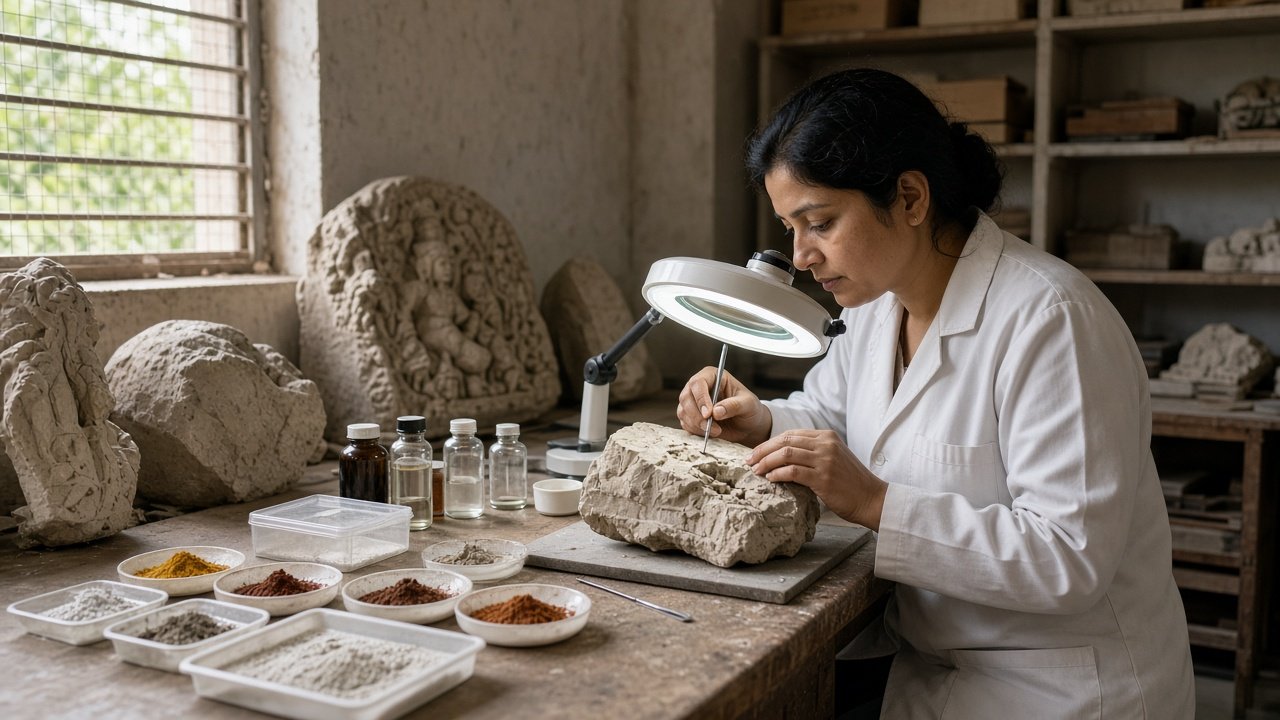
Conservation science at IIACH is presented as a professional curriculum. No treatment of a named protected monument is claimed.
A monument is conserved by understanding its materials, structural behaviour, environment and significance. Work begins with recording and diagnosis, not with a predetermined coating or replacement.
Cracks, leaning walls, failed beams and undermined foundations are structural problems. Temporary shoring, monitoring and engineered repair sit beside archaeological recording so that evidence is not lost in the name of safety.
Indian monuments use sandstone, granite, marble, laterite and many others. Each stone weathers differently. Cleaning, consolidation and shelter-coating are last resorts after salt, water and vegetation are understood.
Iron, copper alloys and precious metals corrode in distinct ways. Stabilisation, desalination where appropriate, and climate control matter more than shine.
Timber in temples, houses and museum objects is attacked by insects, fungi and unstable humidity. Treatment records must note biocides and any replacement members.
Murals and easel paintings require examination of plaster, ground and pigment before any cleaning. Overpaint is documented, not silently removed.
Palm leaf, paper and ink systems need dry, clean storage, careful flattening and imaging. Repair is minimal and reversible where possible.
The most successful treatment is often no treatment: good buildings, stable climate, integrated pest management, handling rules and disaster plans.
Stores and galleries share a conservation policy: light, pollutants, mounts, loan conditions and emergency packing.
Flood, fire, earthquake and civil emergency plans are written before they are needed. Salvage priorities are agreed with curators and communities.
Temperature, relative humidity, light and pollution data explain damage. Sensors without a response protocol are decoration.
Every examination and treatment produces a report: photographs, materials used, ethics notes and a recommendation for review.